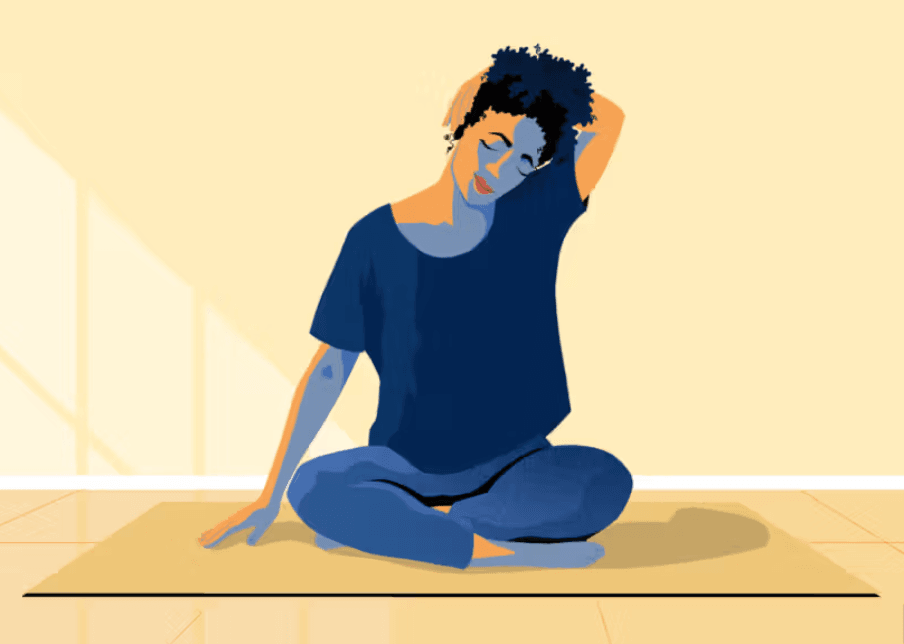
In our original holistic anxiety guide, yoga was highlighted as a powerful mind-body practice. Here we explore it more deeply—its ancient roots, the modern evidence, the brain changes it produces, and how to practice it effectively for anxiety relief.
The History of Yoga as a Tool for Mental Calm
Yoga originated in ancient India more than 2,500–5,000 years ago. The sage Patanjali’s Yoga Sutras (around 400 BCE) (free download) defined yoga as the stilling of the fluctuations of the mind. Classical systems combined ethical living, postures (asanas), breath control (pranayama), and meditation (dhyana). Hatha Yoga (which we currently call Yoga) emphasizes physical asanas as preparation for deeper meditative states. In the 20th century, yoga spread globally and began to be studied clinically for mental health, evolving from a primarily spiritual discipline into a widely accessible therapeutic tool.
Benefits According to Tradition and Modern Research
Traditionally, yoga was understood to calm mental agitation and restore balance. Contemporary research supports significant benefits for anxiety. A major randomized trial found that Kundalini yoga reduced symptoms of generalized anxiety disorder more effectively than a stress-education control, although cognitive behavioral therapy remained superior overall. Systematic reviews show yoga can reduce anxiety symptoms, with particularly promising results for panic disorder and as an adjunctive treatment. Benefits appear across multiple styles when they include postures, breathing, and a meditative component.
How Yoga Practice affects Neurobiology
Yoga increases GABA levels (a calming neurotransmitter), reduces amygdala reactivity, and enhances connectivity in brain networks involved in emotion regulation and interoception. It also improves heart-rate variability and activates the parasympathetic nervous system through slow breathing and sustained attention.
How to practice for anxiety:
- Emphasize longer exhales and simple pranayama (e.g., extended exhale breathing) during the practice, wether individual or in a group.
- Include grounding poses such as Child’s Pose, Root Pose, Legs-Up-the-Wall and forward folds.
- Practice 2–3 times per week for 45-60 minutes, or shorter daily sessions 15–30 min..
- Combine movement with mindful attention to sensation rather than striving for perfect form.
- Focus on strenght, balance, stretch and make a mental note of asanas that challenge you.
- Beginners benefit from guided classes or short sequences focused on nervous-system regulation.
- Many Yoga teachers share postures, breathing exercises and meditation techniques that can be done in the office while still seating at the desk. Many individuals find that practicing them after stressfull meetings or calls, helped them regulated the nervous system.
Conclusion
Yoga offers a uniquely embodied way to work with anxiety. By uniting movement, breath, and awareness, it helps shift the nervous system out of chronic fight-or-flight and into greater regulation and resilience. When practiced consistently and kindly, it becomes both a daily refuge and a long-term ally.
Recommended Books
- Yoga for Anxiety – Mary NurrieStearns & Rick NurrieStearns
- The Yoga-CBT Workbook for Anxiety – Julie Greiner-Ferris & Manjit Kaur Khalsa
- Yoga for Emotional Balance – Bo Forbes
- The Body Keeps the Score – Bessel van der Kolk (for the broader mind-body context)
Sources
- Randomized trial of Kundalini yoga vs. CBT for generalized anxiety disorder (JAMA Psychiatry)
- Systematic reviews and meta-analyses on yoga for anxiety
- Neuroimaging studies on yoga’s effects on GABA, amygdala, and brain connectivity
- Historical overviews of yoga philosophy and modern therapeutic applications
Questions and Suggestions Dont hesitate to write your comment and questions at: support@holisticscentral.com
If you are looking for teachers that can support you on your path to a life free of anxiety checkout our therapists.