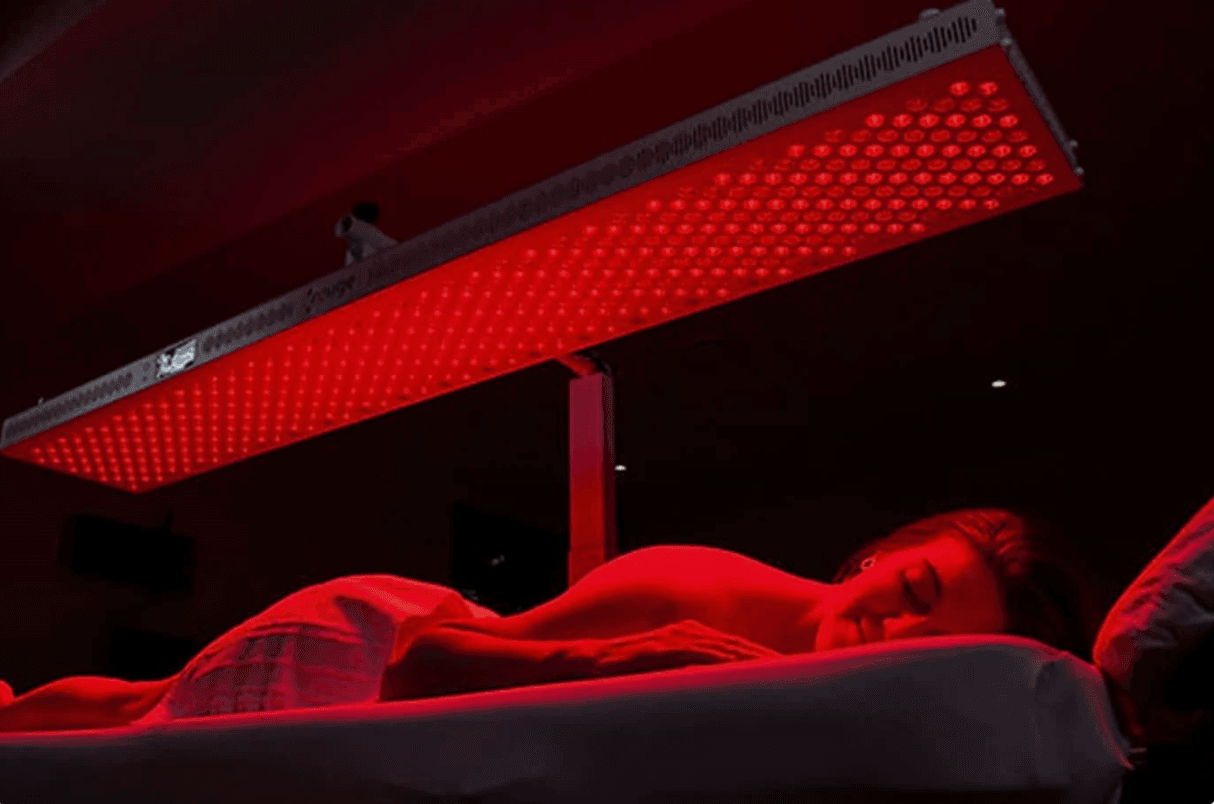
Red and near-infrared light therapy — more precisely called photobiomodulation (PBM) — has moved from a niche research topic to a widely discussed wellness tool. Panels, masks, handheld devices, and full-body systems now promise benefits ranging from better skin and faster recovery to improved cognition and reduced inflammation. Some of these claims rest on solid science; others race far ahead of the evidence.
How Does It Work?
Photobiomodulation uses non-thermal intensities of red light (roughly 620–700 nm) and near-infrared light (roughly 700–1100 nm).
The primary accepted mechanism centers on mitochondria. After-effects include modulated reactive oxygen species (ROS), calcium signaling, and activation of transcription factors (such as NF-κB) that influence inflammation, cell survival, proliferation, and repair.
Secondary mechanisms under investigation include effects on light- or heat-sensitive ion channels (e.g., certain TRP channels) and broader redox and inflammatory signaling. The response is often biphasic: too little light produces little effect, an optimal window produces benefit, and excessive doses can diminish or reverse benefits.
Importantly, this is not the same as heating tissue (as with far-infrared saunas) or high-power surgical lasers. Therapeutic PBM aims for photochemical rather than thermal effects.
Main Research Findings
Thousands of preclinical studies and a growing number of clinical trials exist. An umbrella review of randomized trials has found moderate-certainty evidence supporting benefits in several areas, including:
- Pain and disability reduction in some musculoskeletal conditions (e.g., knee osteoarthritis)
- Hair density improvement in androgenetic alopecia
- Symptom relief in burning mouth syndrome and certain types of fatigue (e.g., fibromyalgia)
- Support for wound healing and tissue repair in specific contexts
- Emerging signals for cognitive function
Other investigated areas include oral mucositis (particularly in cancer care), sports recovery, skin quality (collagen, fine lines, inflammation), and various inflammatory conditions. Results are parameter-dependent — wavelength, irradiance (power density), total energy dose (fluence), treatment duration, frequency, and distance from the skin all matter.
Key Laboratory and Clinical Experimentation
The field traces back to the 1960s work of Endre Mester in Hungary, who observed accelerated hair growth and wound healing in mice exposed to low-power ruby laser light — an accidental finding while investigating potential tumor effects.
Subsequent decades produced extensive in-vitro work (cell proliferation, migration, mitochondrial activity), animal studies (wound healing, nerve injury, muscle recovery, brain models), and human trials. Michael R. Hamblin (formerly of the Wellman Center for Photomedicine at Massachusetts General Hospital / Harvard) has been one of the most prolific researchers, helping clarify mechanisms involving cytochrome c oxidase, ROS signaling, and stem-cell effects.
Modern research includes systematic reviews, meta-analyses, and umbrella reviews that attempt to synthesize the large but heterogeneous literature. NASA-related research in the 1990s–2000s on LED wound healing for space medicine also contributed visibility to the field.
Recommended Protocols (General Principles)
There is no single universal protocol because optimal parameters vary by goal and tissue depth. Evidence-informed ranges often include:
- Wavelengths: 630–670 nm (red) and/or 800–850 nm (near-infrared); some research also examines ~1064 nm
- Energy density: commonly 3–60 J/cm² depending on the target (lower for superficial skin, higher for deeper tissue)
- Session frequency: several times per week for many applications
- Consistency over weeks to months is typically more important than single intense sessions
- Distance and contact: closer proximity or light contact generally improves energy delivery
Individuals should start conservatively, follow device guidelines, and consult a knowledgeable clinician for medical conditions. Eye protection is advisable with bright sources, and photosensitizing medications or conditions require caution.
Distinguishing Science from Marketing Hype and FOMO
The commercial red-light market has grown rapidly, and with it comes exaggeration:
Common overclaims should be viewed skeptically
- “Cures” for complex diseases or dramatic fat loss with minimal evidence
- Guarantees of reversing aging or producing results comparable to medical procedures
- Devices that provide very low irradiance (insufficient dose) while making strong claims
- One-size-fits-all protocols ignoring the biphasic dose response
More grounded reality
- Benefits are real for certain applications but usually modest-to-moderate and cumulative
- Results depend heavily on correct wavelength, sufficient power density, and consistent use
- High-quality clinical evidence is stronger for some uses (pain, wound healing support, hair density) than others (systemic anti-aging, major cognitive enhancement)
- Consumer devices vary widely in quality; independent testing of irradiance and wavelength is valuable
Look for devices that disclose wavelengths and irradiance (mW/cm²) at realistic distances, prefer those used in published studies when possible, and treat dramatic before-and-after marketing with caution.
Who Is Continuing This Work and Developments in the Last 20 Years
Key contributors include Michael Hamblin and numerous research groups worldwide. The shift from expensive lasers to affordable, scalable LED arrays dramatically expanded access and research volume. The last two decades have seen:
- Explosion of publications (thousands of papers)
- Stronger focus on brain applications and cognitive outcomes
- Better mechanistic understanding of mitochondrial and inflammatory pathways
- Increased attention to dosing precision and biphasic responses
- Growth of both clinical devices and home-use systems
- Ongoing work by researchers such as Glen Jeffery (University College London) on metabolic and visual effects of long-wavelength light
Larger, better-controlled trials and standardization of parameters remain priorities for the field.
Four Prominent Books on the Topic
- The Ultimate Guide to Red Light Therapy (Revised & Updated) – Ari Whitten, with contributions by Michael Hamblin, PhD
- Works and edited volumes by Michael R. Hamblin on photobiomodulation and low-level light therapy
- Light as Medicine – Anadi Martel (broader light-therapy context including red/NIR)
- Additional clinical and scientific overviews appear in specialized photomedicine texts and review collections
Notable Documentaries, Interviews, and Educational Videos
- Interviews and deep-dives with Michael Hamblin (various channels, including detailed discussions with Alex Fergus)
- Glen Jeffery appearances (including on the Huberman Lab podcast)
- Independent documentaries and explainers such as “The Red Light Revolution”
- Educational content from researchers and clinicians summarizing mechanisms and evidence
- Numerous practitioner and science-communicator videos evaluating devices and protocols
Conclusion
Red and near-infrared light therapy rests on a plausible biological mechanism — primarily mitochondrial photobiomodulation — and is supported by a substantial body of preclinical research and a growing clinical literature. Evidence is strongest for certain pain conditions, tissue repair support, and hair growth, with promising but still-emerging data for brain health and cognition.
At the same time, the commercial landscape is noisy. Not every glowing panel delivers a therapeutic dose, and not every claimed benefit has robust human evidence. The most rational approach is measured optimism: use high-quality devices with transparent specifications, apply them consistently for evidence-supported goals, and maintain realistic expectations.
When applied thoughtfully, photobiomodulation represents a non-invasive tool that can complement — rather than replace — foundational health practices. As research continues to refine dosing and expand high-quality trials, its place in both clinical and personal wellness settings is likely to become clearer.
Sources
- Systematic reviews and umbrella reviews of photobiomodulation randomized trials (including 2025 analyses)
- Mechanistic reviews on cytochrome c oxidase, ATP, ROS, and NO signaling in PBM
- Work of Michael R. Hamblin and collaborators on molecular and cellular mechanisms
- Clinical and preclinical literature on wound healing, musculoskeletal pain, androgenetic alopecia, and brain PBM
- Studies on transcranial photobiomodulation and cognitive outcomes
- Historical context from Endre Mester’s early laser experiments
- Critical perspectives on commercialization versus evidence quality (Scientific American, academic commentaries)
- Interviews and public lectures by Michael Hamblin, Glen Jeffery, and other researchers