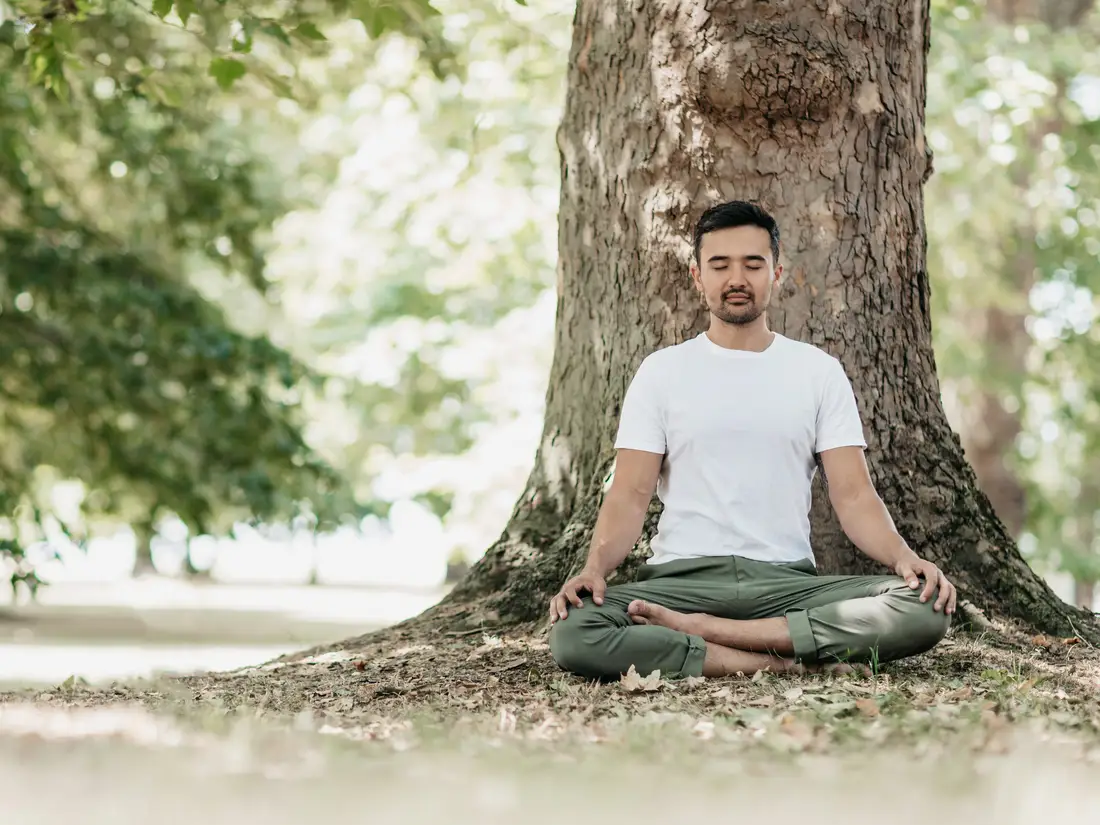
In our earlier exploration of holistic treatments for anxiety, we introduced meditation and mindfulness as foundational tools for reclaiming inner peace. Today we go deeper. Mindfulness-Based Stress Reduction (MBSR) and intentional breathwork offer some of the strongest evidence-based pathways for reducing anxiety, and they are accessible to almost everyone. For Humming another foundational tool for inner peace, refer to this article.
The History of Mindfulness and Breath Practices
Mindfulness has roots in ancient Buddhist traditions more than 2,500 years old, particularly in the concepts of sati (awareness) and Vipassana insight meditation. Similar breath-focused attention appears in Zen and Tibetan practices. In the late 1970s, molecular biologist Jon Kabat-Zinn adapted these teachings into a secular clinical program at the University of Massachusetts Medical School. He created the eight-week Mindfulness-Based Stress Reduction (MBSR) course to help patients with chronic pain and stress, deliberately removing religious framing so the practices could be studied and used in modern healthcare.
Benefits According to Historical Traditions and Modern Studies
Traditional contemplative systems viewed mindfulness as a way to calm the agitated mind and reduce suffering. Modern research strongly supports these benefits for anxiety. Meta-analyses show mindfulness training produces reductions in anxiety symptoms. A landmark 2023 randomized trial found MBSR was not less effective than the commonly prescribed medication escitalopram for anxiety disorders. Studies also demonstrate that even brief daily practice (10–20 minutes) can lower state anxiety, improve emotional regulation, and reduce rumination.
Neurobiology and How to Practice Properly
Neuroimaging reveals that mindfulness reduces activity in the amygdala (the brain’s threat center) while increasing activity and connectivity in the prefrontal cortex and anterior cingulate cortex—regions involved in emotional regulation and self-awareness. It also decreases default-mode network activity associated with mind-wandering and worry.
How to begin:
- Sit comfortably with a straight spine or lie down.
- Bring gentle attention to the breath without trying to change it.
- When the mind wanders (it will), kindly return attention to the sensation of breathing.
- Start with 5–10 minutes daily and gradually increase.
- For structured learning, consider an 8-week MBSR course or guided apps based on the program.
- Simple breathwork options include coherent breathing (5–6 breaths per minute) or cyclic sighing (double inhale through the nose, long exhale through the mouth).
Consistency matters more than perfection. Even short daily sessions rewire stress responses over time.
Conclusion
Mindfulness and breathwork give you a portable, side-effect-free tool that works with your nervous system rather than against it. When practiced regularly, they help transform anxiety from a constant companion into a manageable signal.
Recommended Books
- Full Catastrophe Living – Jon Kabat-Zinn
- The Mindful Way Through Anxiety – Susan M. Orsillo & Lizabeth Roemer
- Wherever You Go, There You Are – Jon Kabat-Zinn
- The Miracle of Mindfulness – Thich Nhat Hanh
Sources
- Jon Kabat-Zinn historical development of MBSR
- NCCIH reviews on mindfulness for anxiety
- Meta-analyses and neuroimaging studies on MBSR and anxiety (including 2023 non-inferiority trial vs. escitalopram)
- fMRI research on amygdala and prefrontal changes