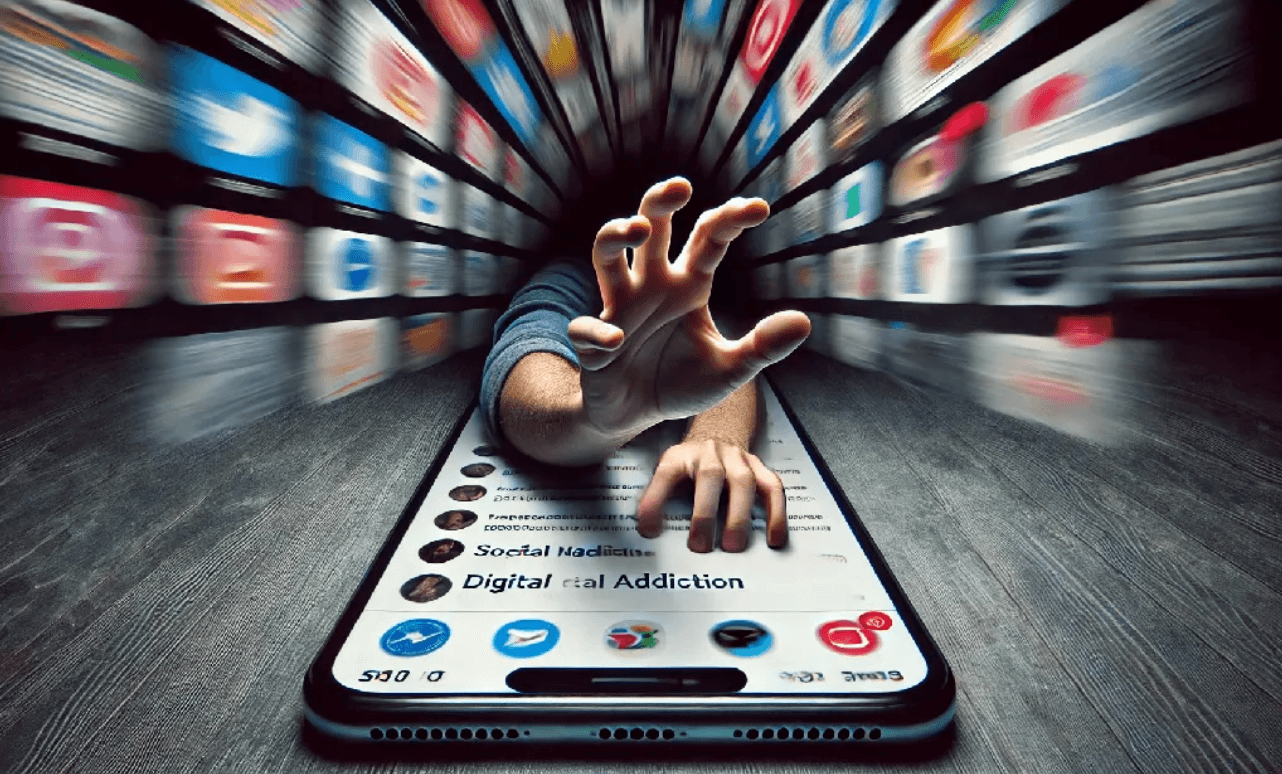
In a world of infinite scrolls, push notifications, and algorithmically curated feeds, many of us feel a quiet exhaustion that is hard to name. You pick up your phone for a quick check and emerge twenty minutes later feeling foggy, restless, or oddly empty. This is not a personal failing. It is the predictable outcome of products deliberately engineered to capture and hold attention by leveraging the brain’s reward systems.
The History of Social Media Design and Product Research
Modern social media design draws heavily from the field of persuasive psychology applied to technology. In the early 2000s, B.J. Fogg’s Persuasive Technology Lab at Stanford University studied how computers and interfaces could influence human attitudes and behaviors. Techniques such as variable rewards, social reciprocity, and habit formation were refined and later applied at scale.
Former Google design ethicist Tristan Harris has publicly described how these principles were adopted across Silicon Valley. Features such as the “like” button, infinite scroll, pull-to-refresh, autoplay, and streak systems were optimized not primarily for user well-being but for engagement metrics that drive advertising revenue. Sean Parker (early Facebook president) and Justin Rosenstein (who helped create the like button) have both acknowledged that the goal was to deliver intermittent dopamine hits that keep people returning.
This design philosophy — often summarized as the attention economy — turned platforms into highly effective behavioral reinforcement machines. Documentaries such as The Social Dilemma (2020) and Dopamine: How Smartphone Apps Get Us Addicted (ARTE, 2023) detail how these mechanisms were developed and the internal debates that followed.
Benefits of Social Media — How to Minimize Addiction and Side Effects
Let us be clear: Social media is not inherently harmful. It enables connection with distant family and friends, rapid information sharing, decentralized news, community building around shared interests, creative expression, professional networking, in some cases collective initiative and coordinated effort. For many people it provides genuine social support and access to knowledge that would otherwise be difficult or impossible to obtain.
The challenge arises when features are designed to maximize engagement and begin to override intentional use. Countless are the time when we need to check the time or location of an event and we end-up scrolling for 20min, forgetting why in the first place we even opened FB or IG. To retain the benefits while reducing addictive pull, we recommend the following:
- Turn off notifications.
- Use app timers and screen-time limits.
- Switch phones to grayscale or reduce luminosity to minimize visual reward intensity.
- Schedule specific times during the day for checking platforms, rather than indulging to the incessant urge to scroll.
- Curate feeds aggressively and unfollow accounts that trigger comparison, anxiety, fear, hatred or discrimination. Most of us at HolisticsCentral have "SAVED" Folders based on the following topics: Engineering, IT, Financial, Health, Holistics, DNA, Acupuncture, etc.. In this way the algorithm provides us with content aligned to our interests.
- Prefer chronological or following-only feeds when available.
- Replace open-ended scrolling with purposeful actions, such as: messaging a specific person, posting content, researching a topic and then closing the app.
- Avoid scrolling before going to bed or right after waking up. Instead you could: Pick up a book and focus your mind on a single topic of attention. Or simply Meditate.
These small frictionless changes interrupt addictive loops and restore a measure of agency.
Neurobiology of Long Exposure to Social Media Scrolling
Research shows that social media engages the brain’s reward circuitry in ways that resemble other behavioral addictions. Key findings include:
- Variable (intermittent) rewards — likes, comments, novel content — trigger dopamine release in the ventral striatum and nucleus accumbens. Dopamine is more accurately associated with “wanting” and motivation than with pure pleasure.
- Structural and functional MRI studies have linked extensive use with changes in regions involved in reward processing, emotional regulation and attentional control. Including reduced gray-matter volume of some areas, altered connectivity and reduce-neuroplasticity.
- Over time, heavy use can lead to resistance: more scrolling is required to achieve the same effect, while reward sensitivity decreases.
- Prolonged exposure is associated with fragmented attention, heightened amygdala reactivity to social cues, and reduced prefrontal inhibitory control — making it harder to disengage.
The result is often a cycle of craving, brief relief and subsequent emptiness or irritability when offline. Documentaries such as The Social Dilemma, Can’t Look Away (2025), and ARTE’s Dopamine explore these mechanisms through interviews with researchers, former platform employees, and affected families.
Common Symptoms Reported by Therapists and Users and Go-To Prevention Protocols
Therapists and individuals frequently report:
- Compulsive checking and difficulty stopping once started
- Anxiety, FOMO, or irritability when unable to access platforms
- Attention fragmentation and reduced ability to sustain focus on deeper tasks
- Sleep disruption from late-night use
- Low mood, social comparison, and lowered self-esteem
- Brain fog or a sense of mental restlessness after long sessions
- Neglect of offline relationships and activities
Protocols that many clinicians and users find helpful:
- Digital Minimalism approach (inspired by Cal Newport) — Conduct a 30-day declutter of optional technologies, then reintroduce only those that serve a clear purpose.
- Scheduled use + friction — Specific time windows, grayscale mode, notification removal, and reduction of apps from the home screen.
- Dopamine-aware lifestyle — Intentionally include low-stimulation activities (walking without headphones, reading physical books, conversation, exercise, sports, engaging with animals) to recalibrate reward sensitivity.
- Mindfulness and urge surfing — Notice the urge to check, without immediately acting on it. Engage with breathing or short grounding exercises.
- Environmental design — Phone-free bedrooms, charging stations outside the bedroom, and device-free meals or mornings.
These strategies work best when applied consistently rather than perfectly. Progress is usually gradual and non-linear. Be gentle with yourself and family.
Documentaries and Educational Videos Worth Watching
- The Social Dilemma (Netflix, 2020) — Features Tristan Harris and other former tech employees.
- Dopamine: How Smartphone Apps Get Us Addicted (ARTE / Léo Favier, 2023).
- Can’t Look Away: The Case Against Social Media (2025).
- Screenagers and related films on teen screen use.
- Plugged In: The True Toxicity of Social Media Revealed.
- Tristan Harris talks and Center for Humane Technology content on YouTube.
- DW Documentary and ARTE segments on the dopamine trap and smartphone habits.
Four Best-Selling and Highly Recommended Books
- Dopamine Nation – Anna Lembke, MD
- Digital Minimalism – Cal Newport
- Stolen Focus – Johann Hari
- Indistractable – Nir Eyal (or How to Break Up With Your Phone by Catherine Price as a practical alternative)
Conclusion
Social media platforms were designed to be compelling. Understanding the history of that design, the neurobiology of variable rewards, and the real symptoms that arise from overuse allows us to respond with clarity rather than self-blame. The benefits of connection and information remain available — they simply do not require surrendering your attention and dopamine system to infinite scrolling.
Start with one small change: a notification audit, a grayscale screen, or a daily phone-free hour. Over time these adjustments compound. Your focus, mood, and sense of agency are worth protecting. You are not powerless against the design. With awareness and consistent practice, you can use these tools without letting them use you.
Cited Sources
- Tristan Harris and Center for Humane Technology materials; The Social Dilemma (2020)
- B.J. Fogg Persuasive Technology Lab research and subsequent applications
- Anna Lembke, Dopamine Nation
- Cal Newport, Digital Minimalism
- Neuroimaging and behavioral studies on social media use, ventral striatum, and reward processing (PMC reviews 2023–2025)
- ARTE documentary Dopamine: How Smartphone Apps Get Us Addicted (Léo Favier, 2023)
- Can’t Look Away: The Case Against Social Media (2025)
- Systematic reviews on structural/functional MRI changes associated with problematic social networking site use
- Clinical observations and protocols drawn from digital wellness literature and therapist reports